
Spiritual Gifts Editorial
- Author(s):
- Caitlin Churchill
- Issue:
- Spiritual Gifts (March 2026)
- Department:
- Editorials
This issue of the magazine is my attempt at understanding how Friends engage with Spiritual Gifts. It has been my vibes-based diagnosis, based on conversations and my own observations, that the nurturing of Spiritual Gifts is a growing edge for unprogrammed meetings in the West. Some Friends write of finding their Gifts nurtured in community while some reckon with expressing their Gifts and the reality of day-to-day survival.
In "Hand for the Spiritual Body" Rob Pierson observed that Friends in a workshop he was running were reluctant to have a Gift of Leadership. I think leadership is the reluctant gift of an initiated adulthood: you’ll enter leadership regardless of your Gifts, because you’ll naturally express what you’re good at and pick up responsibilities along the way. Part of Eldership, in the ageless and Friendly sense of the word, is to start playing your part.
During the winter as I monitored the intermeeting communications that cross my desk, I saw an opportunity for two young adults to travel to Bolivia. Rebecca, the coordinator of the Bolivian Quaker Education Fund, had secured funding for the program fees through New York Yearly Meeting. There is a Spiritual Life Fund at my meeting that I knew might be able to support the plane tickets. I requested and received the funds for myself and my Friend Lydia. It was an unexpected and delightful boon. The things that most excited me about the Quaker Connections Study Tour were traveling with Lydia, who has very different Spiritual Gifts than I do, and the opportunity to meet new Friends. While I show up with plane tickets in hand, Lydia has a way of connecting with people that is unmatched. Her Gifts live in at the intersection of Hospitality and Giving. Though not officially recognized as a Spiritual Gift, she has the gift of gab.
The eve of our departure in early January found me at my uncle’s home in Fort Lauderdale crying in the bathroom from fear. The political situation in Bolivia was unstable. The government removed subsidies on oil causing an affordability crisis and in response blockades were put up by the people restricting motion into and out of La Paz. The blockades meant that the initial plan for us to acclimatize at a lower elevation were sacked (La Paz is at 12,500 feet), the itinerary of the trip had to be reorganized and civil unrest in the capital was possible. Later during our trip Lydia confessed she had also been crying about leaving. The inertia was staggering.
On the plane I watched out the window as the full moon reflected off the Caribbean and then off rivers and lakes in Colombia. The trip would prove to be a challenging and rewarding experience. It was between bouts of illness from the altitude that I decided on the two key factors that made the trip to Bolivia the best Quaker experience of my life.
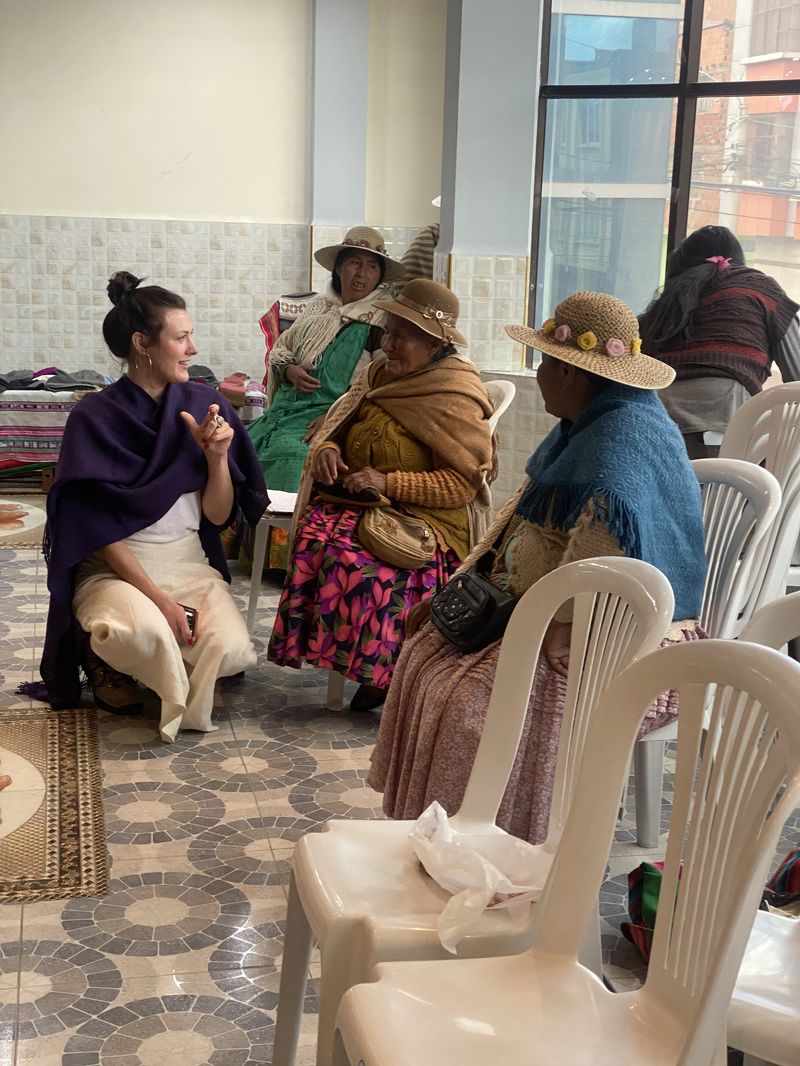
The first factor was the struggle itself. It’s not technically fun to feel sick, ride an aerial tram with a crippling fear of heights, or be hypoxic when going up a flight of stairs. It is fun to be lovingly supported by a cross generational group of people willing to hold your hand or carry your bag. It is rewarding to offer support to another person when they’re struggling and you’re capable. There were multiple times in Bolivia where I danced until I physically could not breathe. Lydia coached me though my fear on the teleférico (ariel tram) ride. I rubbed her back when the bus we were traveling in stalled out at the top of hill, in city traffic, and had to reverse to make another attempt.
The second factor was the diversity of Friends: from age, to spiritual belief, to proximity to Quakerism, to practical skill sets, there was more difference between participants than similarity. We no longer have the luxury of siloing ourselves in cadres of people who look and think just like us. For me this looks like attending an Evangelical Friends Church in La Paz, shaking hands with everyone and singing as loud as I can in Spanish about God. I’m not a big proponent of surrender, but in giving myself over fully to the myriad experiences offered to me in Bolivia, I felt free.
While it was incredible to feel like I had given Lydia the gift of travel, our trip was due to the foresight and diligence of the people who maintain the structures that carried us: Friends who donated money, who started or stewarded funds, and those who currently work for various Quaker organizations. My favorite epitaph in Lone Fir Cemetery says “Here but for the prayers of our mothers.” Leadership, foresight and the written word have a way of reaching forward through time. May our words and deeds be a cache of generosity and refreshment for those who come after us.
Here but for the Gifts of my Friends,
-Caitlin