
Trans Youth Coach
- Author(s):
- Kody Gabriel, Caitlin Churchill
- Issue:
- Experiences of Youth (May 2026)
- Department:
- Interviews
This interview has been modified for length and clarity.
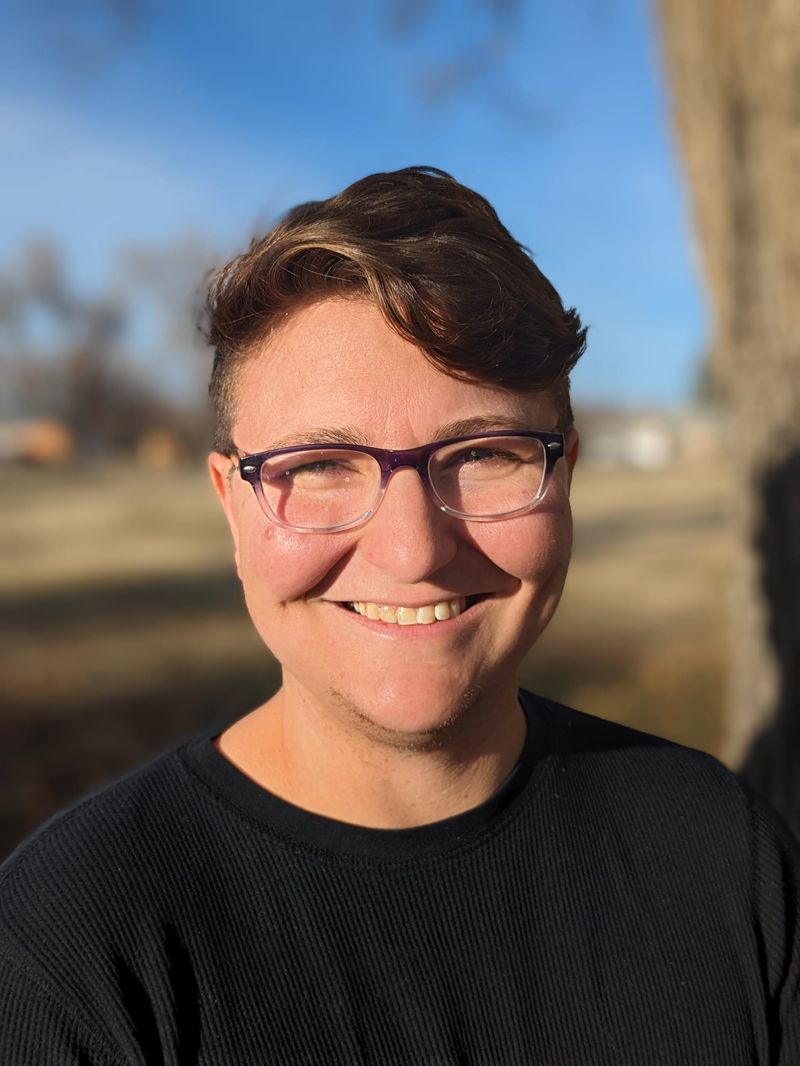
Kody: My name is Kody Gabriel. I use he or they pronouns. I’m a youth worker, coach, and founder of a project called Trans Youth Coaching, through which I’m providing no-cost support to transgender, non-binary, and questioning young people and to their families. I’m a lifelong Friend, a member of Albuquerque Friends Meeting, and I’ve spent a lot of my career employed by Quaker organizations.
Caitlin: I didn’t know the services you provided were free. You mentioned on your website that your coaching is shaped by Quaker beliefs and the intrinsic worth and equality of every person. Can you discuss how you came to understand the testimony of equality?
Kody: Growing up in Quaker community, I was encouraged to have a lived experience of the sacredness of every person who I met. Much more than anyone telling me “Quakers believe in equality,” that lived experience led me into a deep commitment to equality and empathy. Whether you call it the spark of the divine, or the holiness of existence on this planet together, it feels clear that we cut ourselves off from that sacredness if we fail to recognize it in every person.
We learn about the holy from our ability to engage across differences. Difference doesn’t have to be a line between us; it’s a window into what it means to be alive together. It’s heartbreaking to witness the difference between those sacred possibilities and the harsh lived realities of how systems of power treat us. That puts the fight in me. Our systems do not encourage us to see each other as holy and beautiful and whole. We are taught to think in hierarchies—that some people are more worthy of love and care and life than others. There is a part of all of us that knows that is not only untrue, but a violent idea.
Caitlin: How did your youth experience inform the work that you do today?
Kody: I was around 15 or 16 when I came out as trans. As imperfect as my community was in terms of acceptance and education, I had the gift of knowing trans people through my Quaker community. I knew there was a place for me in the tradition. That is not true for so many people who experience a rupture in relationships around coming out. The best evidence we have about the well-being of trans young people tells us that the level of support they get from the adults closest to them makes a profound impact on their mental and physical health. It is so different to imagine your life as a trans kid if you see trans adults around you living their own lives, providing nurture and mentorship. Those concepts have been weaponized by anti-trans political movements calling trans adults “groomers,” attacking the ability to create those supportive relationships. No matter how some people try to demonize it, young people need to see adults who they can imagine being someday. That is a critical part of healthy development.
I’ve always been drawn toward work with people younger than me; I was that teenager all the little kids followed around. I started volunteering with Quaker youth programs as soon as I became an adult. Most youth workers will tell you there is an aspect of our work that brings wholeness—providing to others the things that we needed in our own childhoods. Empathy, remembering what it is like to be a young person, is critical as well.
Over a decade of professional youth work with Quaker organizations, queer and trans kids would seek me out for supportive conversations while they figured out how to talk to their parents and other important adults. I loved being in a position to offer that nurture, and found I was able to provide something different than even a very well-informed cisgender youth worker could– an understanding based on shared experience. I often served as a bridge, talking to parents who were learning something new about their kid and looking for reassurance. It can be scary and overwhelming to be the parent of a trans child initially, helping them make weighty decisions about identity, coming out, bodies, and healthcare. I learned that in order to effectively support young trans people, you have to educate, support, and equip their families, because they are the ones who will accompany those young people, day in and day out.
Caitlin: Can you share the challenges trans youth and their families are facing in the Western U.S. right now?
Kody: There is a concentrated political attack on transgender people in general and youth specifically, with politically repressive laws targeting healthcare happening at both the national and state level. In the Western U.S., there’s a wide variety of legal situations. In Idaho, physicians can be charged with a felony and imprisoned for up to 10 years for providing gender-affirming care that is the recommended care in line with professional standards—care recognized as medically necessary by every major US medical professional organization. Then you have places like New Mexico, where there are currently very strong legal protections.
Every state, whatever its laws, is seeing the impact of the political attack on trans kids. New Mexico and other sanctuary states are seeing significant numbers of people relocate from other states to access care and social support. The immense political pressure on providers, even in safe states, has caused many gender-affirming care clinics to close. People are having trouble finding doctors even where it is legal. In Western states, where there may already be significant physical distance between folks and their providers, this can have particularly devastating effects. If you live in rural Idaho and your provider in Denver closes, for example, you face massive access issues.
In Albuquerque, we have an organization called the Transgender Resource Center right across from our Meeting house. They are doing critical social support for relocated families. This is a place where Quaker communities can plug in, offering a space where newly arrived trans young people and their families can find support and welcome. These families have uprooted themselves from their entire communities. We need to be explicit about offering affirming community and pastoral care to them.
Caitlin: There are many parallels between the coordinated attack on reproductive rights and gender-affirming care. It’s a way for the state to decide who has bodily autonomy. Could you share an anonymous story about a coaching client that warmed your heart?
Kody: The first clients I worked with were a child who was reaching the point of making medical decisions related to puberty and transition, and that child’s parent. The parent told me how many providers they had taken the child to, and how differently the child responded to me as a trans person outside of a medical setting.
Care for trans folks can be so medicalized, but our identities don’t need to be treated as a diagnosis. It is cool to meet people outside of that rigid framework, make silly faces over Zoom, and connect with a gentle informality that a doctor or therapist can’t provide. The parent told me they had never seen their child be so comfortable with a provider so quickly, and they left the conversation with a lightness the parent hadn’t seen before.
I don’t want people to define trans bodies or experiences as “problems.” Being trans is a particular experience of having a body and a gender, just like being cis (not trans) is. It has challenges, and it has immense blessings. There’s nothing inherently harder about it except that other people make it harder. When I talk with parents of newly-out kids, they often reflect that I make it sound like “not such a big deal.” While I take the social and political context seriously, I want to convey the joy and blessing of this experience. When community shows up, kids can live with lightness and joy.
From the beginning, I have not charged clients for coaching sessions or other direct support. Instead, I invite clients and others to consider making a donation. I’m hoping this can be my primary work for the foreseeable future, and many people in my extended Quaker community have become ongoing donors in support of that goal. There’s a “Pay It Forward” tab on my website that describes the community-funded model. Quaker communities can also support this work, and help build a more inclusive community, by reaching out to me for workshops or community education, in person or online. I have articles on my site that address common concerns and questions about trans youth and gender-affirming care, and links to additional educational resources. Communities should prepare themselves to be welcoming and affirming even if they aren’t aware of any trans young people in their meeting. You can have trans people in your community and not know it. And many families with trans youth members are looking for supportive spiritual communities, especially because so many people have to leave their religious communities when their kids come out. Creating community spaces where people experience love and affirmation is a way to make a difference on an issue that often feels out of our control.
Caitlin: You mentioned how the client connected with you in a sillier way. It seems like you’re able to provide a ministry that is relaxed and removes the veil of political fear. Nobody freaks out if someone goes through menopause or gives birth or goes through a cisgender puberty.
Kody: Well, everyone freaks out a bit during cisgender puberty! Puberty is inherently weird. And some people decide they aren’t the gender everyone has been telling them they are. Life comes with quirks and unexpected things. It is a normal part of the human experience.
Caitlin: Do you have anything else you want to say?
Kody: We’re living in a time of so many horrors—violence from our government, persecution of minorities, restrictions of rights, and ways people have been turned on one another. It can feel deeply discouraging. But support for trans kids is an area in which small actions of support by individuals and communities can make a profound difference in a vulnerable time.
I was at a conference recently where a trans historian said, “We’re about to win. This is backlash against transformation that has already happened, continues to happen, and is unstoppable.” People in power are threatened by transformation that gives people more bodily autonomy. They are throwing really big, really scary hissy fits. They are doing real damage, but progress is not going backwards. It means we are scaring them. I don’t know whether I believe that or if I’m just exercising the discipline of considering it might be true—but it feels like it could be. None of this government violence can stop us recognizing each other’s humanity in a deeper way.
Learn more about Kody’s work at www.transyouthcoaching.org